二〇二六年
Corporations without new hires
By León Palafox
- ia
- financiero
- trabajo
For a long time, being a beginner has been where everything starts. An apprentice builder would eventually learn to construct buildings; an apprentice carpenter would eventually learn to make furniture. Cultures such as Japan’s still place great importance and ceremony on apprenticeships and beginners. Many companies still send their new hires to work in the most transactional roles within the organization as part of their training. And in many restaurants, the path to becoming a chef begins with repeatedly washing rice for the head chef to use.
As professions evolved, we continued to apply this same principle, creating positions such as associates in law firms or trainees in computer science, where young professionals learned the fundamentals of their chosen fields through routine, basic work. Ultimately, apprenticeships and hands-on learning have been a defining feature of human work for as long as work itself has existed.
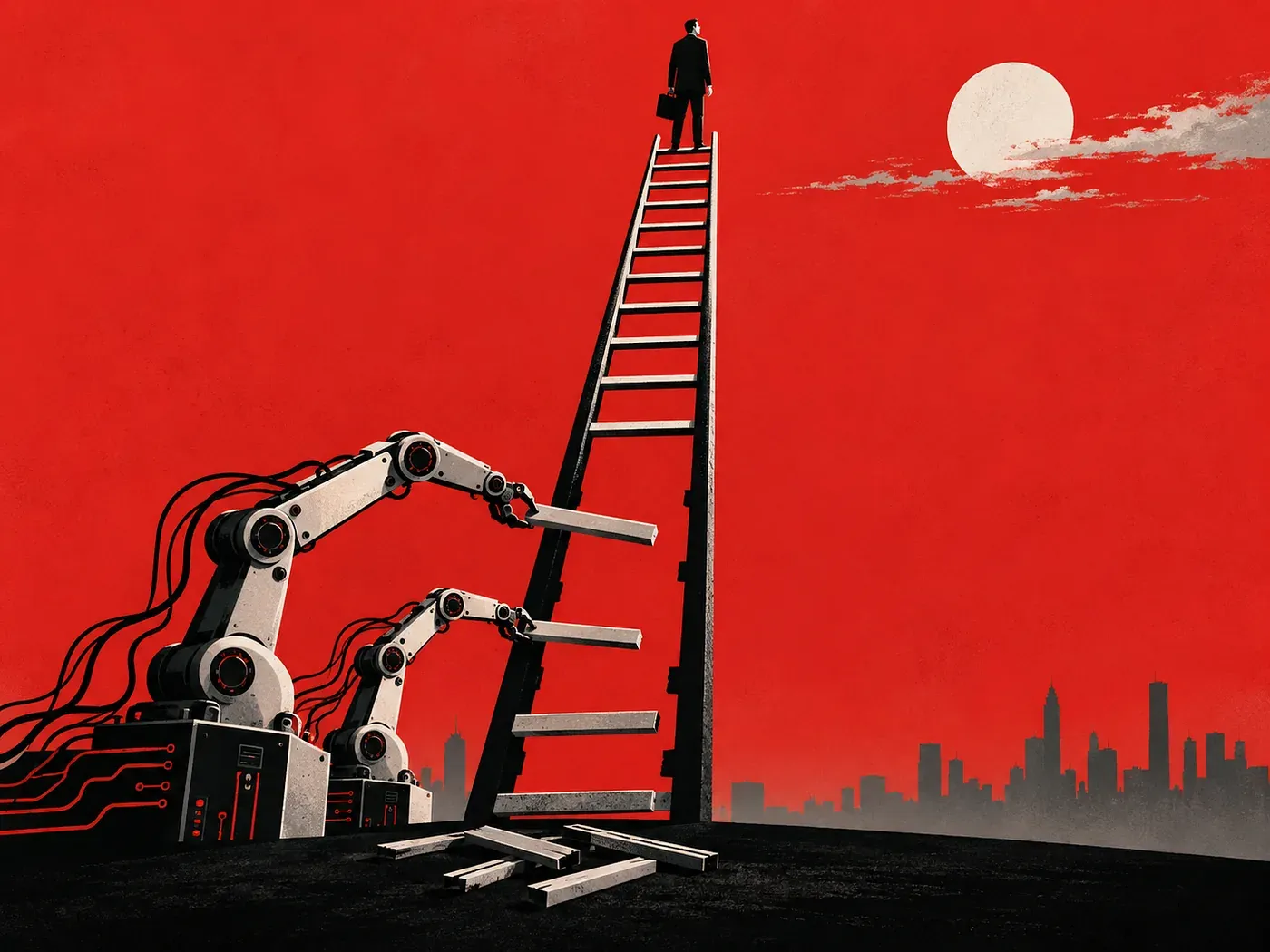
Today, that contract is beginning to break down. Stanford’s Institute for Human-Centered Artificial Intelligence (HAI) has been studying the effects of artificial intelligence tools on the labor market and has found that some of the jobs most affected by these new technologies are those typically held by young people beginning their careers. These positions have experienced some of the weakest employment growth since the introduction of ChatGPT. And while the research has not established causality, it does reveal a correlation we cannot ignore.
The World Economic Forum, in its publication Artificial Intelligence and the Future of Entry-Level Work: A Framework for Safeguarding and Reinventing Early Career Pathways, examines how these practices and their consequences will ultimately affect not only employment opportunities for young people but also the number of experts that companies will be able to develop in the future. These effects, however, are not yet being fully felt, as many job automation systems still require considerable time and organizational change to implement. It is also possible that the impact will never be quite so apparent and that, instead, new workers will find themselves in jobs that do not yet exist.
And we cannot overlook the paradox facing companies: in their efforts to save money by automating routine work, they may eventually find themselves without employees who can truly learn and grow within their organizations.
This places the onus on governments around the world, which may eventually face a population of highly trained workers unable to find employment because the tasks associated with their skills have become heavily automated. Perhaps this is the moment to consider programs such as training outside traditional employment or even creating entirely new pathways for learning. Some governments have already undertaken initiatives of this kind, but today, more than ever, it is important to expand them as widely as possible.
From my perspective, those of us involved in professional and academic education face one of the greatest challenges we have ever encountered. For the first time, we do not know with certainty what kind of world our students will face. We do not even know whether the skills we are teaching them in schools or workplaces will still be relevant by the time they graduate from university or complete their internships.
It is more important than ever for professionals themselves to stay informed about the changing labor market and for universities to respond more quickly to these transformations, developing curricula that are closely aligned with what society needs rather than relying on programs that are updated only once every five years.
And finally, it is important to understand that the world is changing, and our role within it is evolving as well. The challenge will not simply be to find new jobs for beginners, but to ensure that pathways still exist for them to become experts. Because if we automate the tasks through which we learn, we will also have to reinvent the way we learn.